Phuket Town vs the Beach Towns for a Long Rental: The Honest Trade-Off Remote Workers, Retirees and Families Miss
The Short Answer
Most long-stayers arrive assuming they want to live at the beach, and many of them are right. But a surprising number discover, a few weeks into a stay, that they chose the wrong base — or that the friend who recommended the beach was living a completely different life from theirs. Phuket Town and the west-coast beach towns (Patong, Kata, Karon, Kamala) are only about half an hour apart, yet the day-to-day experience of renting in each is genuinely different. This is the honest comparison nobody gives you before you sign a lease: what each place costs, what daily life actually feels like, and who tends to end up happier where after the first month.
Rent: The Gap Is Real
For like-for-like homes, Phuket Town is usually the cheaper base — often noticeably so. Typical ranges vary by season, building age and furnishing, but as a rough guide a comfortable two-bedroom condo or small house in Town might run in the region of ฿15,000–30,000 a month on a longer lease, while a similar standard near the popular west-coast beaches often starts around ฿25,000 and climbs well beyond ฿40,000 in high season. One-bedroom places follow the same pattern: Town stock aimed at Thai professionals and long-stay foreigners is priced for residents, while beach-town stock is priced against holiday budgets.
The exception is the very top and bottom of the market: luxury villas cluster around the beaches and Laguna, and the cheapest simple rooms exist wherever you look. But for the broad middle — the furnished two-bedroom a remote worker or retired couple actually wants — Town usually wins on price per square metre, and leases there are more often genuinely monthly rather than built from weekly holiday rates.
Food, Markets and Daily Spending
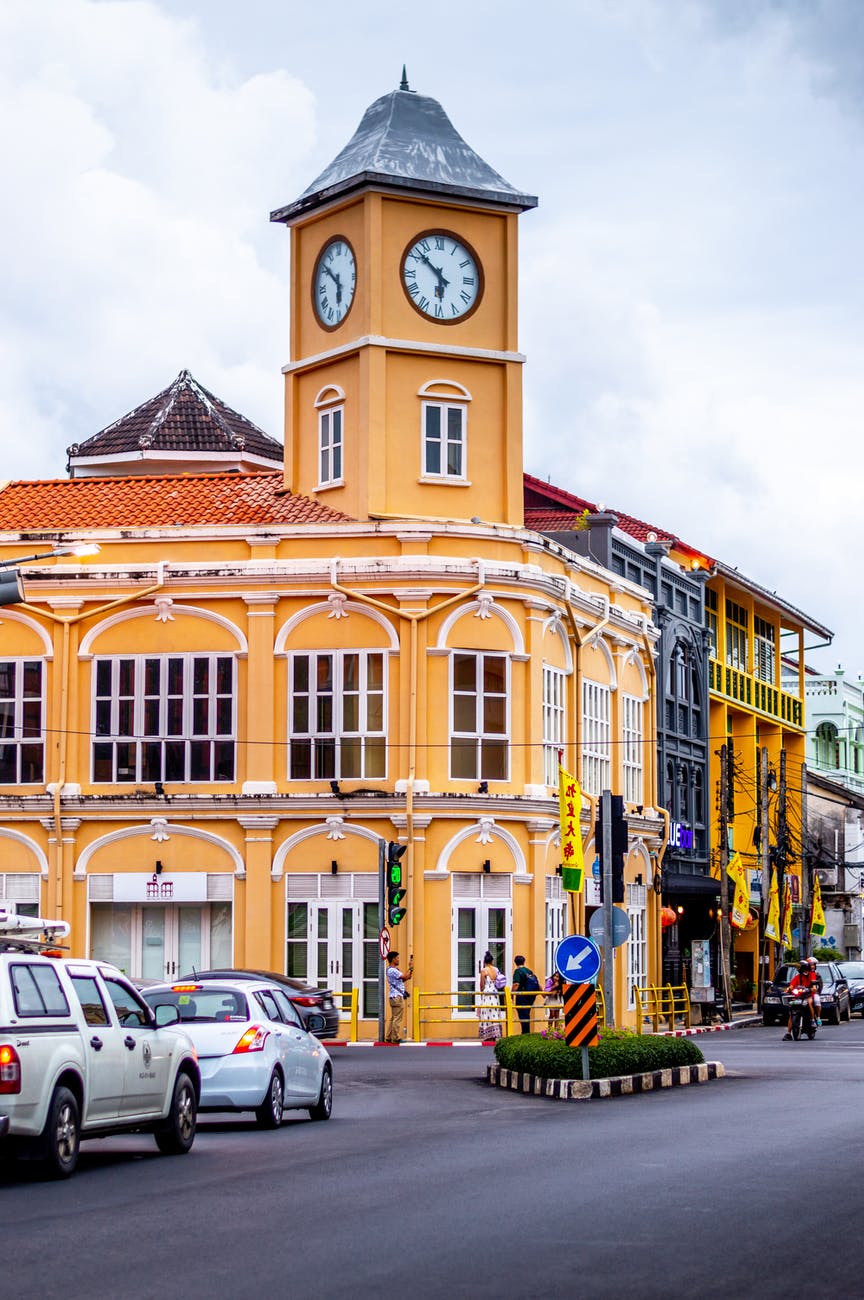
Phuket Town is where Phuket's people actually live, and the food scene reflects it. Morning markets, decades-old kopitiam coffee shops, famous local restaurants and cheap eats are everywhere, at local prices. A long-stayer in Town can eat very well for a fraction of beach-town spending, and the weekend markets — including the Sunday walking street in the Old Town — are entertainment in themselves.
Beach towns are built for visitors, which cuts both ways. You'll find more international food, beach clubs and sunset bars, but everyday items carry a tourist markup, and in Patong the choice skews toward holiday eating rather than weekly-shopping convenience. Kata, Kamala and Rawai sit somewhere in between, with enough local infrastructure for real daily life. Wherever you base yourself, the area guides at Phuket Rentals break down what each neighbourhood offers long-stayers day to day.
Admin, Hospitals and Schools: Town Wins Quietly
This is the unglamorous section that ends up mattering most. Phuket Town is the island's administrative capital: the main immigration office, the land transport office, government buildings and the main post office all run through or near Town. When you need a certificate of residence, a licence conversion or a hospital file, living ten minutes away beats living forty minutes away every time.
Healthcare follows the same pattern. The island's largest hospitals — including the main private hospitals most expats use — are in or near Town, along with the widest choice of clinics, dentists and pharmacies. For retirees managing ongoing care, and for families who want an international school run that doesn't eat the morning (the larger international schools are mostly in the Town–Kathu corridor), Town quietly removes a lot of friction from long-stay life.
The Beach Question
The obvious counterweight: Town has no beach. The nearest proper swimming beaches are roughly 30–45 minutes away depending on traffic — a bus, songthaew or scooter ride to Patong, Kata or the southern strands. For many long-stayers that's a non-issue: after the first fortnight, most people swim a few times a week, not daily, and a planned beach trip feels like an outing rather than a commute. For others — surfers in season, daily swimmers, anyone whose whole reason for coming is the sea — that buffer between home and water slowly becomes the thing they resent. Be honest about which person you are; for most people this one answer decides the whole comparison.
Noise, Nightlife and Sleep
Beach towns, Patong above all, are loud in a way that's fun for a week and wearing for a month. Bars, tour traffic, and the general hum of a resort that never fully sleeps are part of the package near the action — though every beach town has quieter pockets a few streets back, and places like Kamala and Rawai are far calmer than their reputation suggests. Phuket Town has its own lively strips, but residential streets a few minutes from the Old Town core are genuinely quiet at night, and the rhythm is a working city's rhythm: busy mornings, sleepy afternoons, early evenings.
Community: Two Different Expat Worlds
Town's foreign community skews toward people who live in Phuket year-round — teachers, business owners, long-term residents — plus a deep Thai social world if you make small efforts with the language. Beach-town communities skew toward fellow long-stayers and seasonal regulars: easier to plug into quickly, more transient underneath. Neither is better; a month is long enough to feel the difference.
Who Ends Up Happier Where
Remote workers split down the middle. If your days are laptop-first and your beach time is evenings and weekends, Town offers cheaper rent, better cafés for working, faster errands and calmer sleep — and many quietly move there for month two. If the whole point of working from Phuket is a swim before standup, pay the beach premium and be glad of it.
Retirees tend to land happiest in Town or its edges: hospitals and admin close by, markets and local life at the door, gentler prices, and a pace that feels like living somewhere rather than holidaying somewhere. The retirees who thrive at the beach are the active ones who use it daily.
Families usually do best wherever the school run works — most often the Town–Kathu side — or in family-oriented beach areas like Kamala and Rawai where the pace is slower and the community more settled. Patong itself suits very few families for a month-plus stay.
A Simple Decision Checklist
- Will you swim or surf most days? If yes, base at the beach.
- Is your budget the deciding factor? Town stretches it furthest.
- Do you have school runs, hospital visits or paperwork ahead? Town removes the friction.
- Do you sleep lightly or work odd hours? Choose Town, or a quiet pocket well back from a beach town's main strip.
- Is your social life the priority — bars, beach clubs, meeting people easily? The beach towns win.
- Still torn? Rent the first month in one and a later month in the other. A long stay is the one luxury that lets you test both — and month two is when most people quietly switch to the base that fits their real life.
Book Direct & Save 20% — reserve your Patong condo stay directly at phvcondo.com
Call or WhatsApp: +66800528082
About Jay & Scott — Jay and Scott are travelers and writers living in Thailand. We enjoy traveling around Thailand — the food, the beaches, the small towns — and writing about it as we go. Back home in Patong we run our long-stay condos at Patong Harbor View. Watch the video tours, then come stay a while: www.phvcondo.com.


Comments
Post a Comment