Renting Solo in Phuket for a Month or More: Choosing a Building, Street and Floor Where Living Alone Feels Safe and Easy
Living alone in Phuket for a month or more is a very different experience from sharing a place, splitting a holiday rental with friends, or staying in a hotel where someone is always at the desk. On your own, the building becomes your base in a much more personal way. It is where you come home after dark, where you leave your passport and laptop while you go to the beach, where you sleep when the street outside is still lively, and where you need to feel settled enough to actually live a normal routine — cooking a little, working a little, resting properly, and heading out without a small knot of worry each time.
We meet a lot of solo long-stayers in Patong and across Phuket, and the happiest ones rarely chose the cheapest room or the prettiest listing photo. They chose a building that worked at 9 p.m. as well as it worked at 10 a.m. They could walk to food and a pharmacy without arranging transport. They knew someone was around if a pipe leaked or they locked themselves out. Their floor was quiet enough, their door felt solid, and their street did not go completely dark and empty the moment the shops closed. None of that shows up well in a listing, which is why solo renting rewards a slower, more practical kind of viewing.
This guide is about those choices: building, street and floor, in that order. It is not about being fearful — Phuket is, for most long-stayers we know, an easy and friendly place to live alone. It is about stacking the small comforts in your favour so living solo feels easy from the first week.
Start With the Building, Not the Room
When you rent with a partner or a friend, a plain building with no staff is rarely a problem. One of you is usually around, and if something goes wrong you have company while you sort it out. Solo, the building itself does a lot of that work. A staffed lobby, even a small one, changes the feel of coming and going. There is a familiar face who notices regulars, a place to ask about a parcel or a taxi, and someone to call on if you hear a strange noise in the corridor or your air-conditioning starts dripping at midnight.
Ask, plainly, who is on site and when. Some buildings have a juristic office open in the day and security overnight. Some have a guard at the gate but nobody inside. Some smaller blocks have neither, just a key box and a phone number taped to a noticeboard. None of these is automatically wrong, but they suit different people. If you are new to Thailand, new to living abroad alone, or arriving for your first long stay, we would put real value on a building where help is physically present for most of the day and reachable at night. On a later stay, once you know the area and the routines, you may happily trade that for a quieter, smaller block.
Access control matters in the same practical way. A lift that needs a fob or key card to reach residential floors, a stair door that actually closes and latches, and a main entrance that is not simply propped open all day are good signs. Test them when you view. Ride the lift, try the corridor door, look at whether delivery riders and visitors can wander straight to apartment doors or whether they are stopped at reception. You are not looking for a fortress. You are looking for ordinary friction that keeps your floor for residents and their guests.

The room itself should be right-sized for one. A compact one-bedroom often beats both a studio and a big two-bedroom for a solo stay. In a studio, your bed, desk, sofa and kitchen share one air-conditioned box, which can feel cramped by week three and makes it hard to separate work from rest. A large unit, meanwhile, costs more to cool, takes longer to clean, and can feel oddly empty in low season. A small separate bedroom, a living space you can close a door on, and a balcony for morning coffee is, for many solo renters, the sweet spot: private, manageable and genuinely liveable.
The Street Matters More After Dark
Viewings almost always happen in daylight, when every street in Phuket looks friendly. Solo renters should judge a street by its evening character. Is it well lit, with open shops, food stalls, a convenience store or a laundry that keeps people around into the evening? Or does it go quiet and dark by seven, with shuttered units and a long unlit stretch between you and the main road? A lively but not rowdy street is ideal. You want eyes on the street and a reason for ordinary people to be there, without living directly over a bar strip that peaks at 2 a.m.
Walk the route you will actually use. From the building door, walk to the nearest place you would buy water and basics, to the street where you would catch transport, and to the main road. Note the pavements — or the lack of them — the drainage covers, the parked motorcycles you have to step around, and any dark gap beside an empty lot or a closed construction site. In the rainy season, also note where water pools. A short walk in dry weather can become an ankle-deep wade after a heavy downpour, and coming home alone in the rain on a flooded, dark soi is nobody's idea of easy living.
Different areas suit solo living in different ways. In Patong, the streets a few blocks back from the beach and the main entertainment area tend to give you the best mix: food, clinics, pharmacies and transport on foot, plenty of people around, but a calmer night than the front streets. Around Phuket Town you get a more local, year-round feel, with markets and services that do not depend on tourist seasons, though you will travel further for a swim. Kata, Karon and Kamala have a village rhythm that many solo stayers love in high season, but parts can feel very quiet in the green season when seasonal businesses close. Chalong and Rawai feel residential and settled, good for people with a routine and their own transport, less convenient if you want everything on foot. There is no single best area — there is the area whose evenings match how you live.
Markets and clinics deserve a specific check. Can you reach fresh food on foot, or will every shop mean a ride? Is there a pharmacy nearby that keeps evening hours, and do you know where the nearest clinic or hospital is before you need one? Solo living is mostly joyful independence, but the one time you are unwell and alone, having a pharmacy a short walk away and a clinic you can reach easily is worth more than a sea view. We always suggest saving the building office number, a taxi number and the clinic location in your phone on day one, before you need any of them.
Choosing a Floor When You Live Alone
Floor choice is personal, but solo renters tend to feel the trade-offs more sharply. Ground-floor units are easy for shopping and laundry and spare you the lift, but they are the most exposed to passing foot traffic, street noise and curious eyes at window level. If you like a ground floor, check window locks, curtains or film for privacy, and whether the balcony or terrace is overlooked or directly accessible from a public path. Many people pass on ground floor for a first solo stay simply because a little height feels more private.
Low to middle floors are often the practical favourite. You are high enough for privacy and a bit of breeze, low enough that stairs are a realistic option if the lift is being serviced, and close enough to the lobby that the corridor rarely feels deserted. Very high floors give you views and distance from street noise, but you depend entirely on the lift, and in a quiet building a top-floor corridor with only a couple of occupied units can feel isolated in low season. Ask how many units on the floor are lived in year-round versus kept as holiday homes. A floor with neighbours around — people whose routines you start to recognise — is a quiet comfort when you live alone.

Within the floor, look at where the unit sits. A door right beside the lift lobby or the stairwell gets every arrival and departure at full volume. A unit at the far end of a corridor is quieter but means a longer walk past other doors at night — check the corridor lighting as you go. Note the fire stairs and exits, not because you expect to use them, but because a building that keeps them clear and lit is a building that is looked after. And check your own front door properly: a solid door, a lock that turns smoothly, a peephole or viewer, and a balcony door that locks from inside are small things you will use every single day.
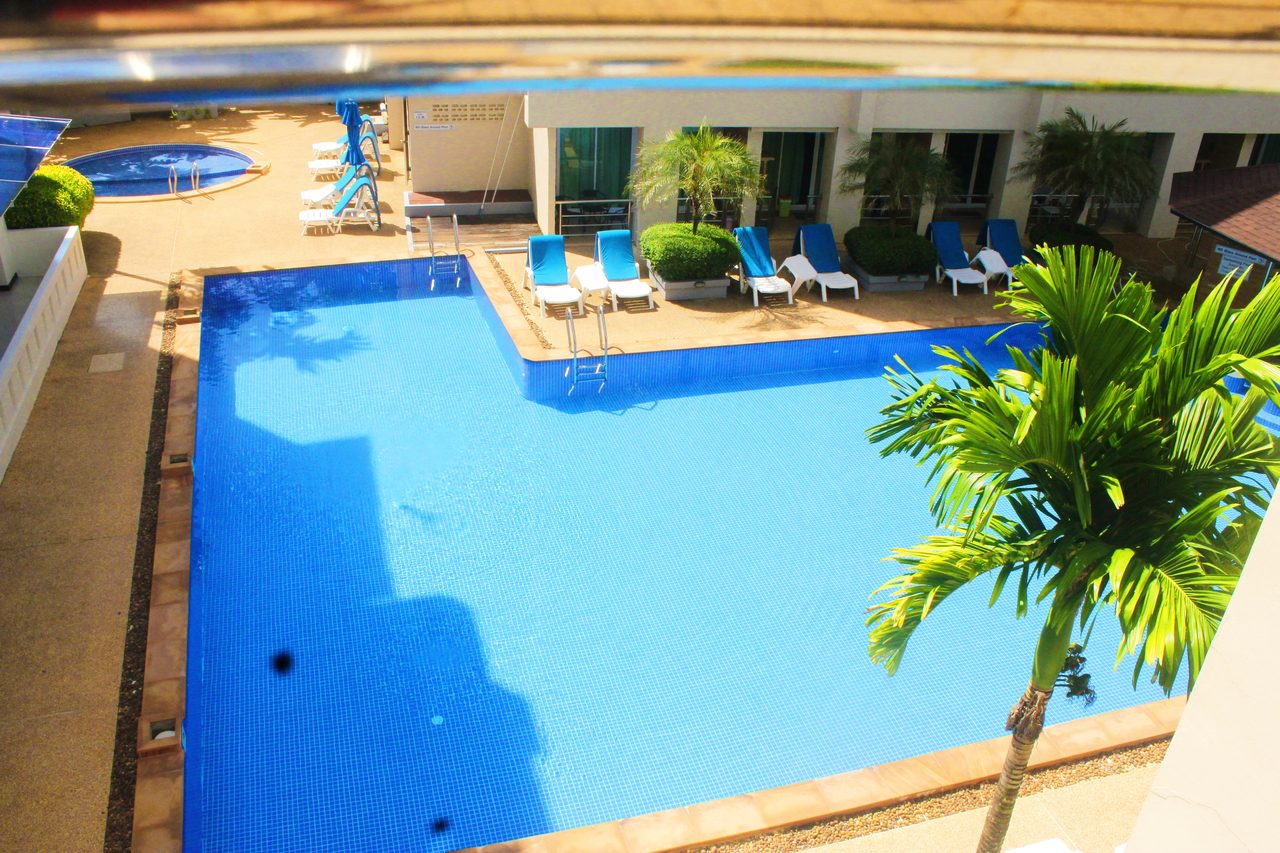
Noise deserves its own moment. Solo, there is no one else's television or conversation to mask the building's sounds. Ask which side the unit faces. A bedroom facing an inner courtyard or pool usually sleeps better than one facing a busy road, a bar street or the building's bin and delivery area. If the unit is under a rooftop bar, gym or plant room, ask about operating hours. Visit, close the bedroom door, turn everything off and just listen for a minute. That quiet minute tells you more than any listing description.
The Night-Time Visit: The One Viewing That Counts Most
If you can do only one extra thing before signing, go back in the evening. Ideally, go once in the early evening, when you would normally be coming home, and glance at the street again later if you are nearby. You are checking five simple things. First, light: is the route from the main road to the building door properly lit, including the building entrance and car park? Second, people: is the soi calmly alive, or deserted, or unexpectedly rowdy? Third, access: is security present, is the gate working, do you see residents coming and going normally? Fourth, sound: stand outside and then, if the agent allows, inside the unit, and listen for music, road noise and building plant. Fifth, your own feeling: does walking that route alone feel relaxed? Trust that feeling. It is data.
Daytime checks still matter, and a good viewing list helps. Run the air-conditioning in every room and listen for rattles and drips. Check water pressure and hot water in the shower. Flush, run taps, look under sinks for leaks and mould. Open the fridge, the wardrobes and the balcony door. Test the Wi-Fi with a video call if you plan to work, and check your phone signal in the bedroom, not just by the window. Look at the fuse box, the washing machine if there is one, and the general state of the corridor, lift and pool — shared areas are the honest advertisement for how a building is managed.
Ask direct questions and note the answers. Who do I contact at night if something breaks or I am locked out? How do guests and deliveries get in? Where does rubbish go, and on which days? Is there a safe in the unit, and if not, where would you suggest keeping a passport? What happens if I need to leave a month early? A good manager or agent answers these calmly and specifically. Vague answers to simple operational questions are a reason to slow down, whoever you are renting with.
Costs Worth Paying For, and Costs to Save On
Solo renters often ask where they can save. Our honest answer is to save on space and spectacle, and to spend — within reason — on location, building support and sleep. A slightly smaller unit on a good street in a staffed building will usually give you a happier month than a larger unit down a dark soi in a building with nobody around. A view you look at for five minutes a day is easy to trade away. A quiet bedroom, a reliable shower, decent blackout curtains and air-conditioning that does not rattle are things you benefit from every night.
Utilities are worth understanding before you sign, because they vary a lot between buildings. Ask whether electricity and water are billed at the government rate or at a building rate, and ask to see how the meter is read. A solo person in a compact unit who is out in the day will generally use far less than a couple cooling a large unit around the clock, so a smaller, well-shaded home is also a cheaper one to run. Ask about cleaning costs, linen changes, parking if you rent a scooter, and any fee for using facilities, so the monthly picture is complete rather than discovered week by week.

Where can you safely save? Furnishings packages, decorative extras and units priced for a holiday couple's week rather than a resident's month. Long-stay value in Phuket usually comes from a fair monthly rate in a well-run building, not from marble counters. If a place is priced at the top of your range, ask what is included that you will actually use daily — cleaning, Wi-Fi, parking, gym, pool, utilities allowance — and price the comparison on that all-in basis. Solo, you have the advantage of needing less: less space, less storage, less cooling. Use that advantage to buy the things that actually protect your comfort: street, staff and sleep.
A Simple Solo Routine That Makes a Place Feel Safe
The final piece is not the property at all, it is rhythm. In the first week, learn your building. Say hello to the lobby staff and the guard, find out the office hours, walk your exits, and note which neighbours you see regularly. Learn your street the same way: your morning coffee place, your evening food stall, the convenience store staff who start to recognise you. Living alone abroad feels safest when you are not anonymous — when a handful of people near home know your face and would notice if your routine suddenly changed.
If you cannot decide between two places, picture an ordinary Tuesday in each: work a little, shop a little, come home in the evening, cook something simple and go to bed early. The place where that Tuesday sounds easiest is almost always the right choice.
About Jay & Scott — Jay and Scott are travelers and writers living in Thailand. We enjoy traveling around Thailand — the food, the beaches, the small towns — and writing about it as we go. Back home in Phuket we run phvcondo.com, our long-stay condo rentals in Patong. Have a look at the room photos. Come stay a while: Patong Harbor View Condominium


Comments
Post a Comment